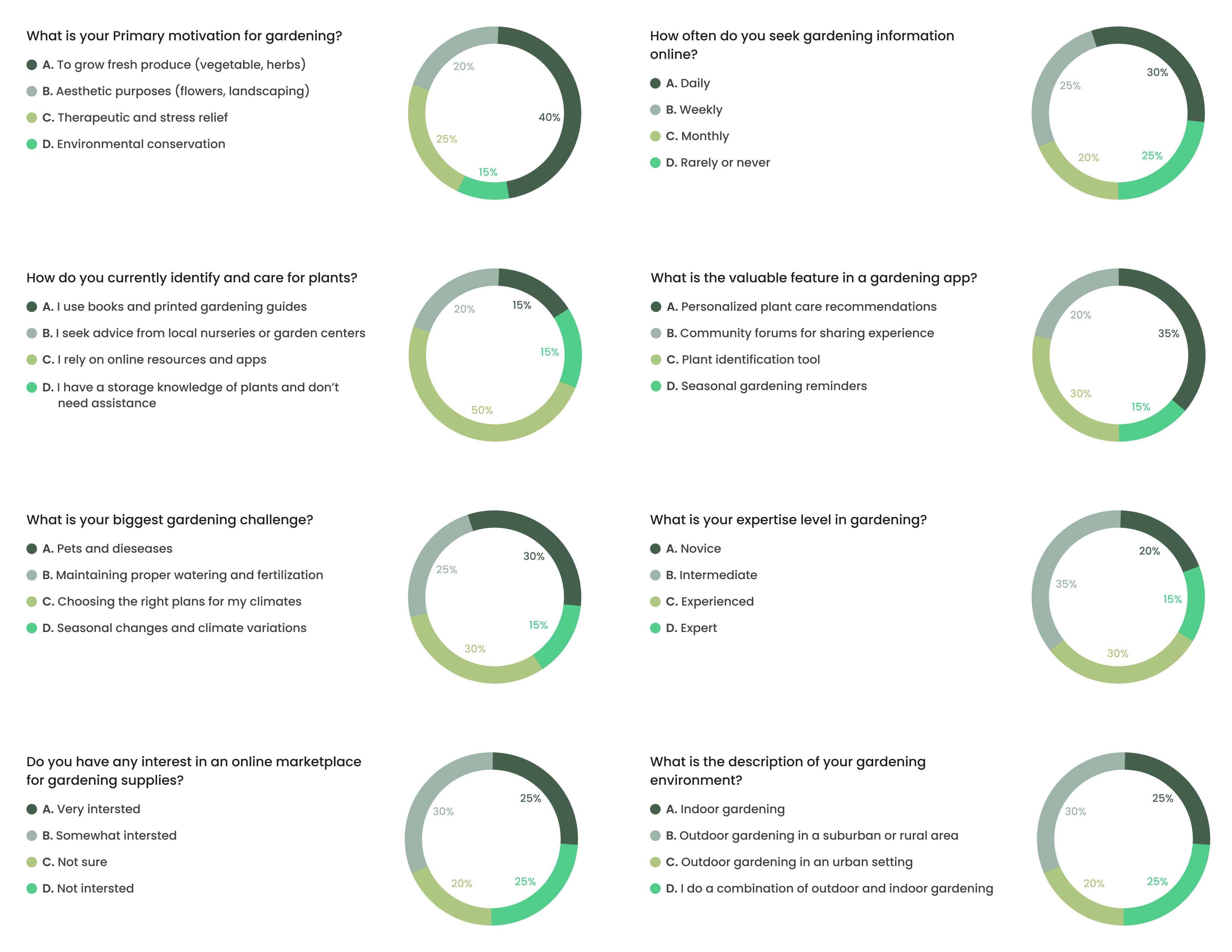
As urban living becomes the norm, more people find themselves wanting to grow plants without having grown up with the knowledge to do it well. Generic advice online rarely accounts for local climate conditions, and most guidance assumes a baseline of experience that many beginners simply don't have. Research with target users confirmed this: 30% struggled with identifying and managing pests and diseases, 30% didn't know how to select plants suited to their climate, and 25% were unsure about basic care routines like watering and fertilization.
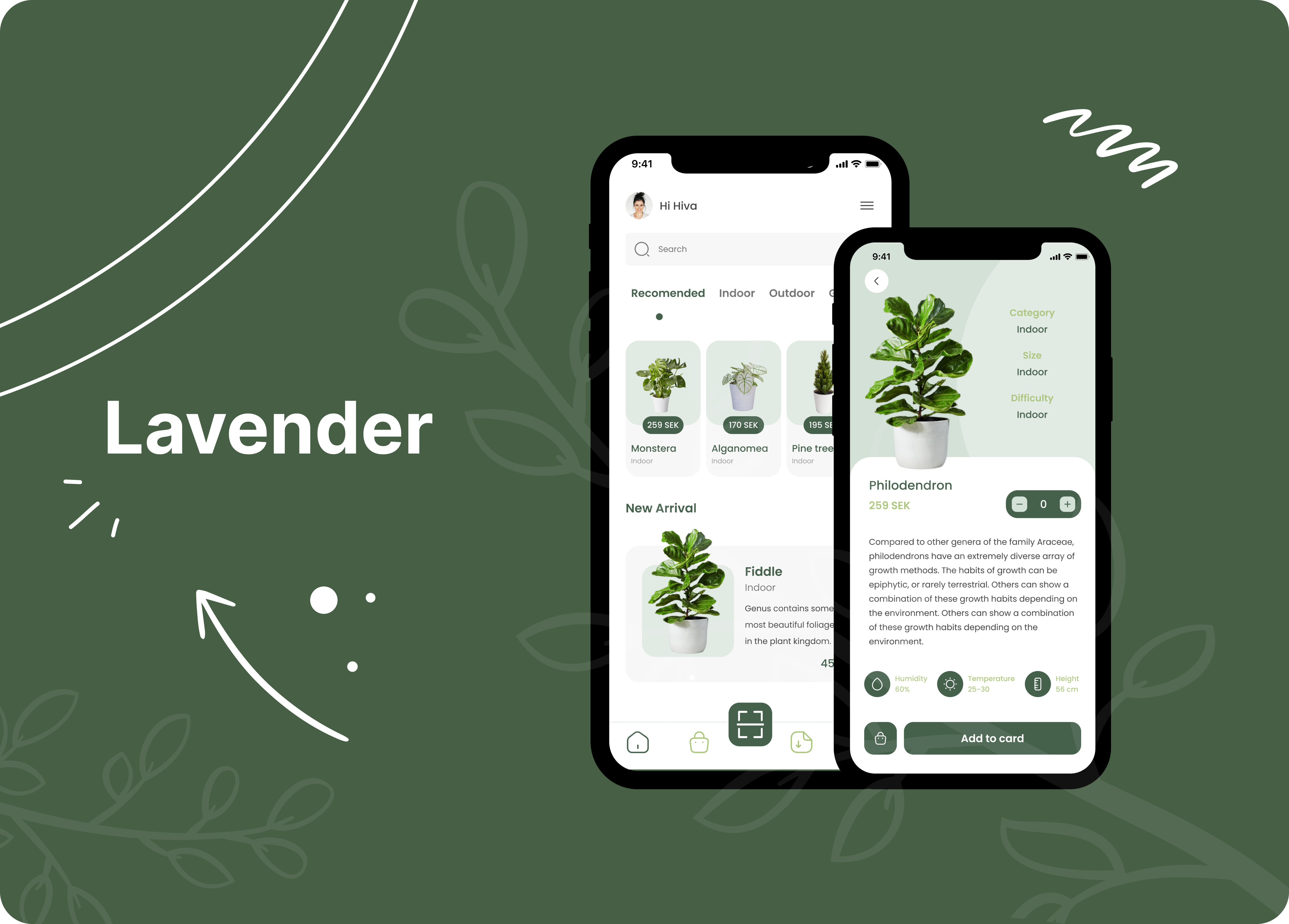
Lavender was designed as a mobile companion that meets users where they are, regardless of their experience level. Rather than offering one-size-fits-all gardening tips, the app combines plant identification, climate-aware recommendations, and personalized care guidance to give users the right information at the right time. The goal was simple: make plant care feel approachable, not overwhelming.
Despite growing interest in plants and home gardening, most people hit the same wall early on:
01
No reliable way to know if a plant is suited to their specific climate or environment
02
Generic care advice that doesn't adapt to their situation, skill level, or local conditions
03
Difficulty diagnosing problems: identifying pests, diseases, or care mistakes before it's too late
04
Feeling isolated with no accessible community or expert to ask for help
05
Overwhelm from too much information with no clear starting point
The result is a cycle of failed attempts that discourages people from trying again, even when the interest is genuinely there.
50%
Already rely on online resources or apps for plant care guidance
35%
Said personalized care recommendations would be the most valuable feature
30%
Identified community support as a top need alongside expert guidance
Survey conducted with target users across different gardening experience levels and environments.
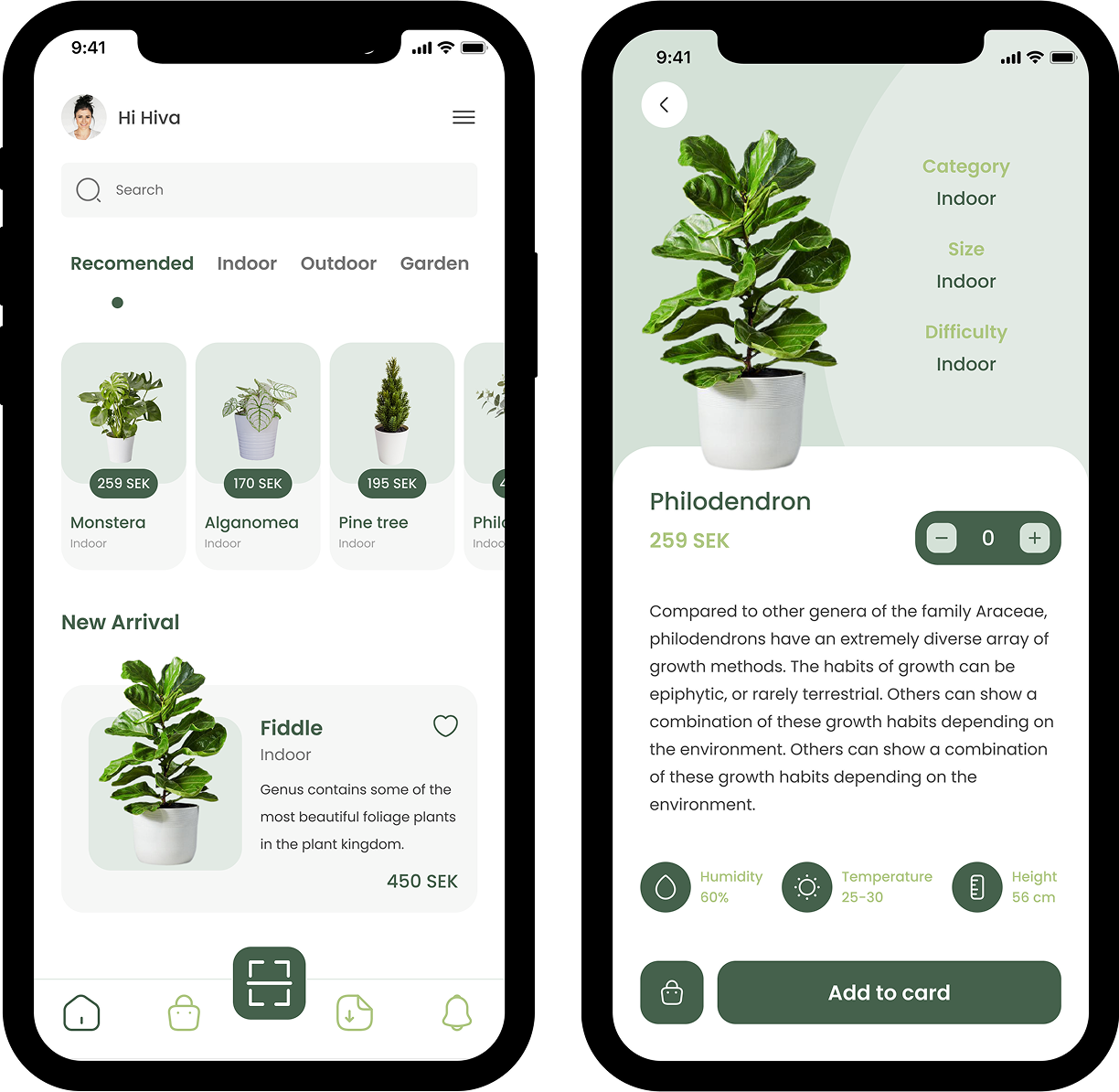
Lavender addresses the core problem by removing the guesswork at every stage of the plant ownership journey. Rather than presenting users with overwhelming generic information, the app guides them through a personalized path: finding plants that suit their specific living conditions, purchasing them, and staying on top of their care without needing any prior expertise.
The experience is built around three connected moments: discovery (finding the right plant for your space and climate), care (understanding exactly what that plant needs and when), and reminders (proactive nudges that make consistent care feel effortless). Together these create a companion that grows with the user rather than assuming they already know what they're doing.
Design Principles
Personalization over breadth: Fewer well-matched recommendations beat an overwhelming catalogue. Every suggestion is relevant to the user's specific conditions, not generic.
Progressive disclosure: Show only what's needed at each moment. Onboarding asks the minimum, care guidance surfaces detail only when the user needs it.
Confidence, not instruction: The tone and UI are designed to reassure, not lecture. The goal is for users to feel capable, not dependent on the app.
01
Understanding the user
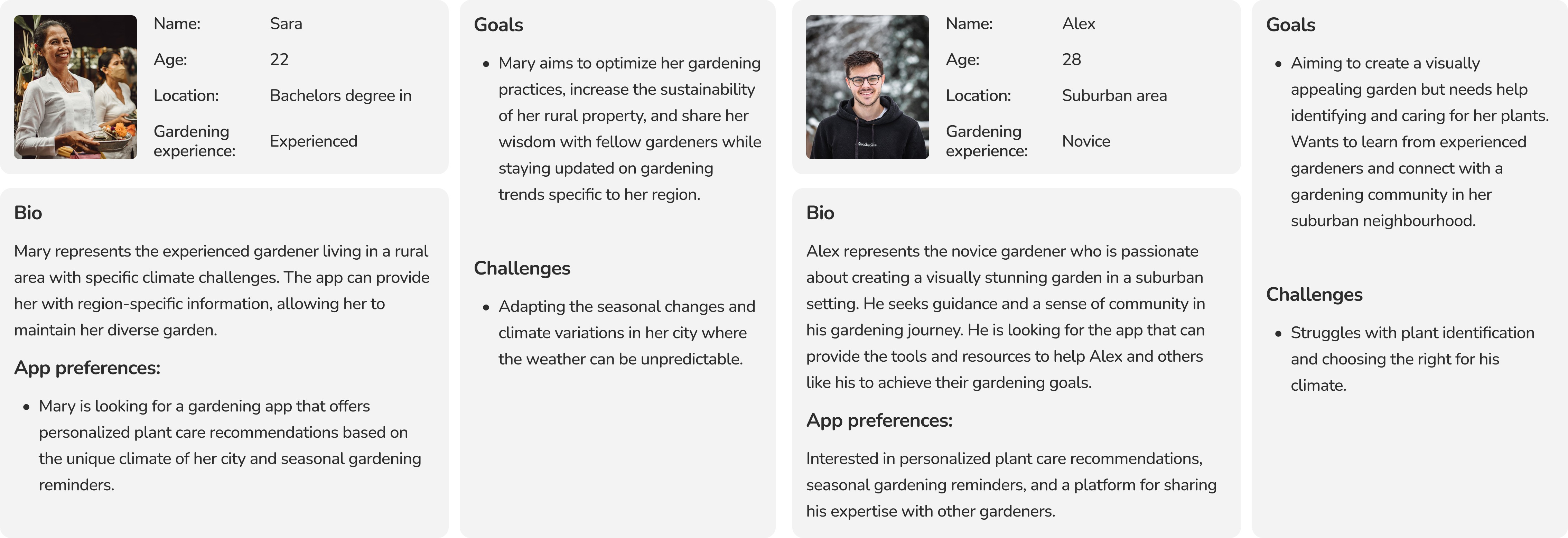
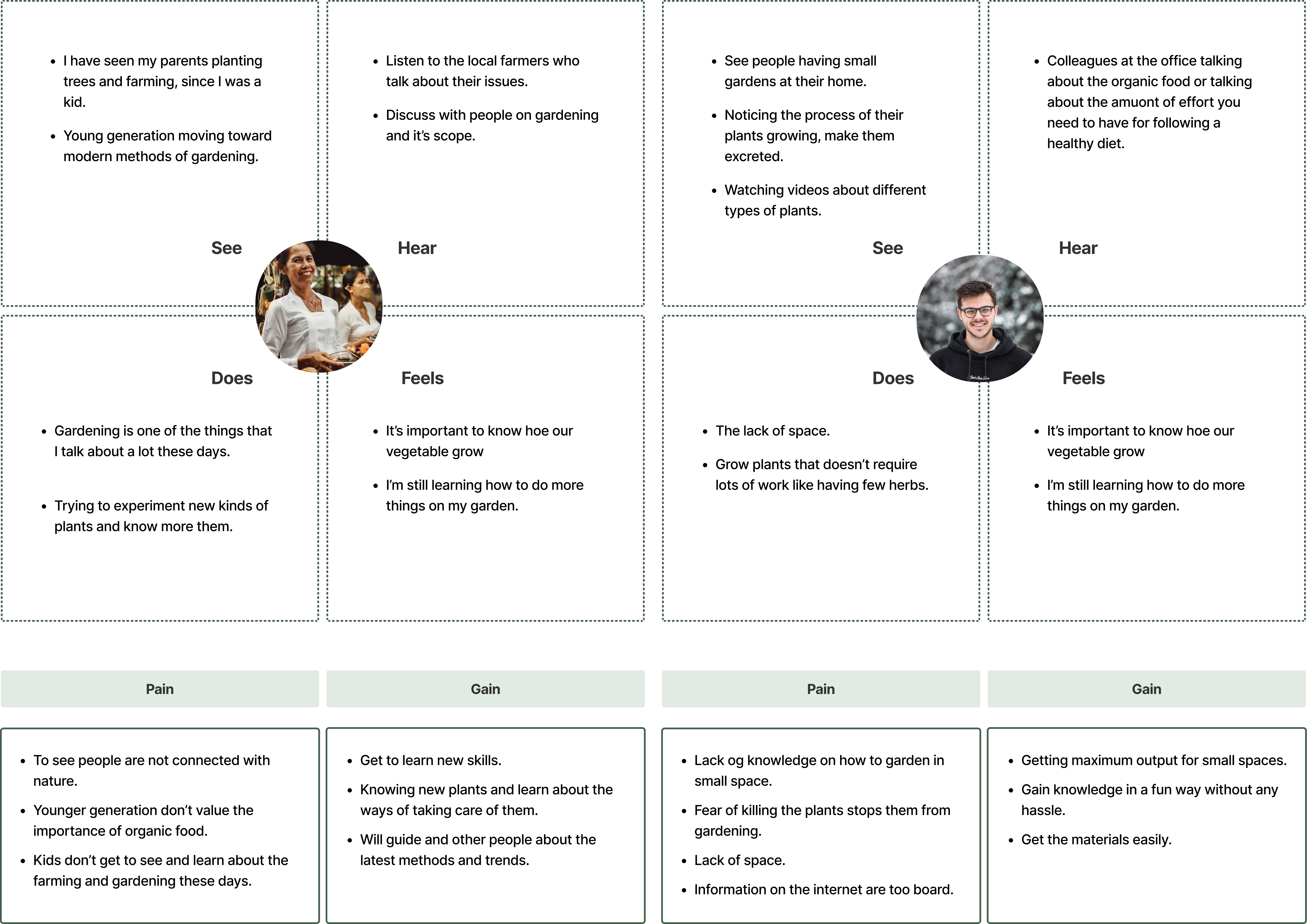
I began with a survey to understand who gardeners actually are and what holds them back. The findings shaped two personas: Mary, an experienced gardener in a rural area who needs region-specific guidance, and Alex, a novice in a suburban setting who wants to grow plants but lacks confidence and knowledge. Empathy mapping for both revealed a key emotional barrier, particularly for Alex: the fear of killing plants stops people from even starting.
Key decision
I designed for both user types simultaneously rather than picking one, since their needs overlapped more than they conflicted.
Why
Beginner users need guidance and reassurance, while experienced ones need specificity and efficiency. Both benefit from personalization, just at different depths.
02
Defining the design direction
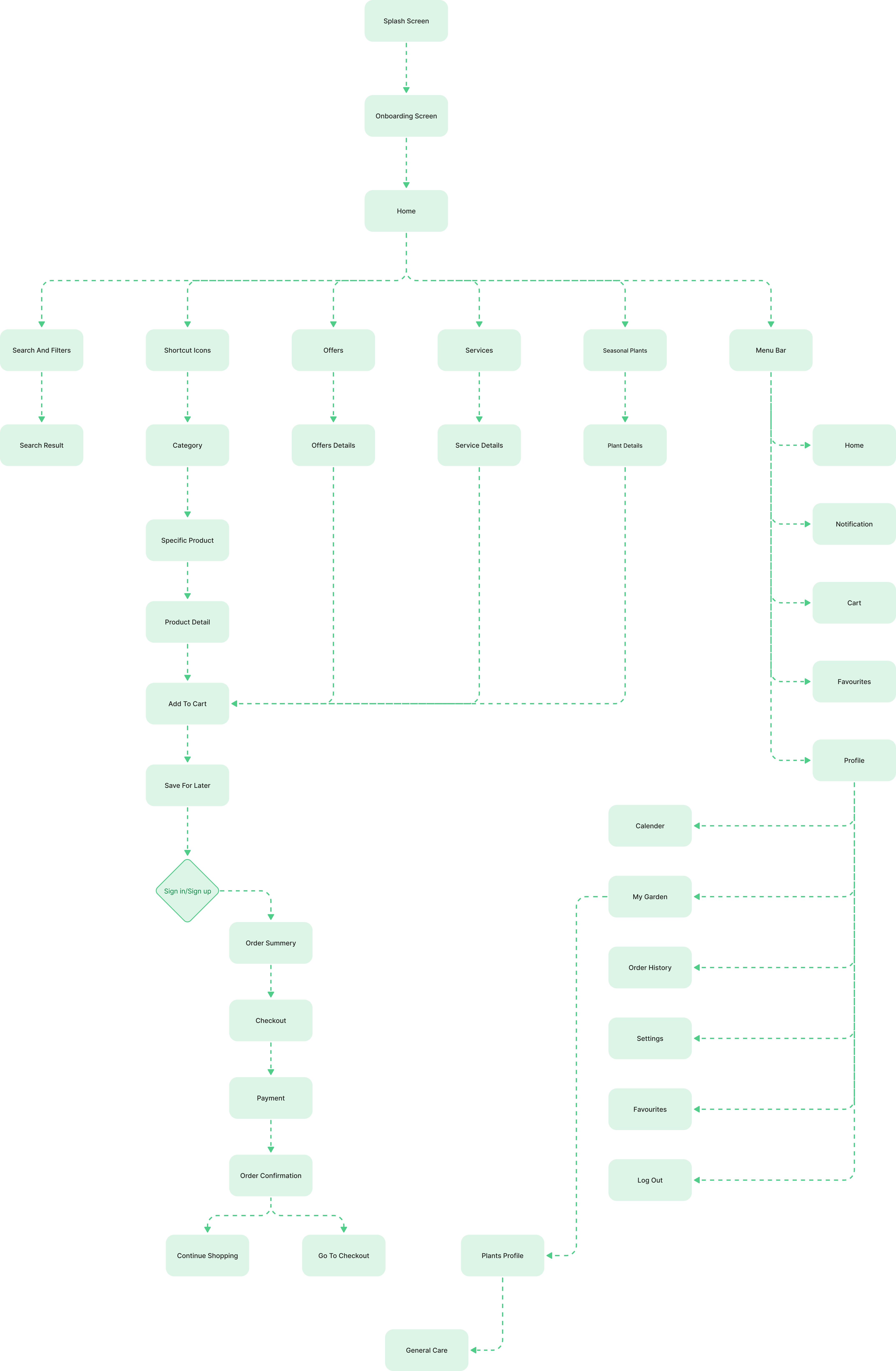
With the research synthesized, I identified the three moments that matter most in a plant owner's journey: finding the right plant, learning how to care for it, and remembering to act. These became the backbone of the design direction: everything in the app needed to serve at least one of these moments clearly.
Key decision
I prioritized personalization over breadth: a smaller set of well-matched recommendations over an overwhelming catalogue.
Why
The research showed that too much information was already one of the core problems. Adding more content without context would replicate the issue rather than solve it.
03
Designing the experience
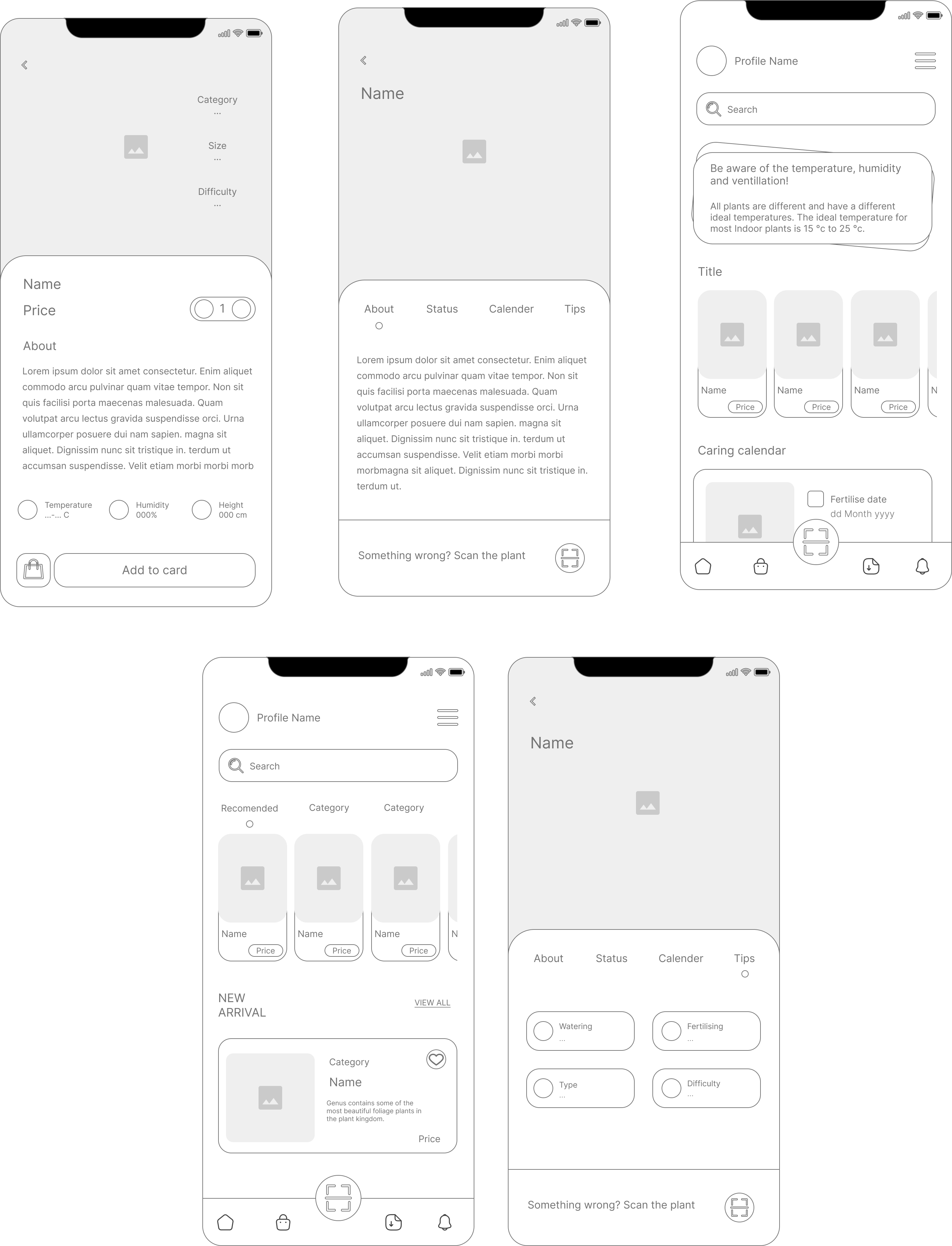
I moved from low-fidelity wireframes to high-fidelity mockups, working through the three core flows: plant discovery, care guidance, and reminders. Each flow was designed to feel self-contained but connected, so a user could enter at any point without needing to complete the others first.
Key decision
I kept the onboarding questions minimal, just enough to personalize the experience without making users feel they were filling out a form before getting any value.
Why
First impressions matter more in B2C than B2B. If the app feels like work before it feels useful, users drop off before seeing what it can do.
01
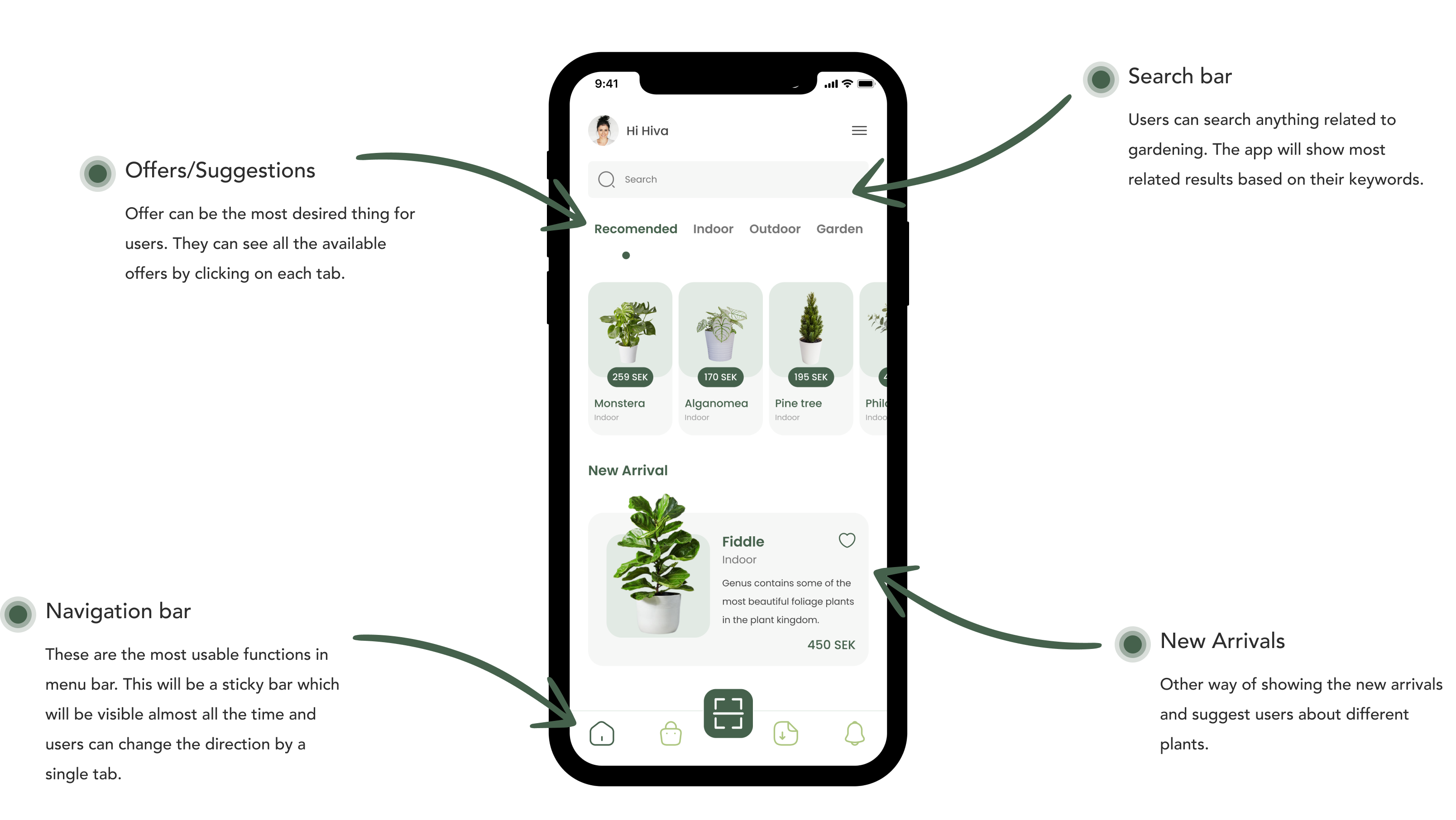
Climate-based plant discovery
Browse and filter plants based on your specific climate, environment, and available space, so every suggestion is relevant from the start.
Impact
Removes the guesswork from plant selection and reduces the chance of buying something that won't survive your conditions.
02
Plant identification
Identify any plant instantly by taking a photo, getting its name, care requirements, and suitability for your environment in one step.
Impact
Lowers the barrier to learning and gives users confidence when exploring plants they don't recognise.
03
Personalized care guidance
Each plant comes with care instructions tailored to the user's location, season, and experience level rather than generic advice.
Impact
Makes plant care feel manageable and builds user confidence over time.
04
Smart reminders
Proactive notifications tell users exactly what to do and when, based on each plant's specific needs and the current season.
Impact
Reduces plant loss caused by forgotten care routines and keeps users engaged without requiring them to remember everything themselves.
05
Community
Connect with other gardeners to share progress, ask questions, and get advice from people with similar climates and experience levels.
Impact
Addresses the sense of isolation identified in research and turns gardening into a shared experience.
L1
Research reveals emotional barriers, not just functional ones
The survey pointed to functional gaps like missing care guidance and climate information. But empathy mapping uncovered something deeper: the fear of killing plants was stopping people from even trying. That emotional barrier shaped the entire design direction toward reassurance and confidence-building, not just information delivery.
Next step
Test whether specific UX patterns (gentle error states, progress encouragement) measurably reduce user anxiety during onboarding.
L2
Designing for a wide expertise spectrum is harder than it looks
Mary and Alex had overlapping but distinct needs. The challenge wasn't building separate experiences, it was finding the design decisions that served both without compromising either. Personalization helped, but the tension between depth and simplicity is something that would need real iteration with real users to get right.
Next step
Explore progressive profiling, letting the app learn user expertise over time rather than asking upfront.
L3
A concept can validate direction but not delivery
The research validated that the problem is real and the solution direction is right. But many of the hardest design questions (does the personalization actually feel personal? do reminders help or annoy?) can only be answered with a live product and real usage data.
Next step
Build a lightweight MVP focused on the discovery and care flows to test core assumptions with real users.
If I were doing this project again, I would spend more time testing the personalization logic with real users early on. The concept assumes that climate and environment data is enough to make meaningful recommendations, but without real usage, it's impossible to know whether the personalization actually feels relevant or just decorative.